FIFTY YEARS
OF MAKING THE IMPOSSIBLE POSSIBLE
Somewhere in Patagonia, Argentina manufactures satellites that orbit the planet and designs reactors whose radioisotopes reach patients around the world. It builds radars that monitor the airspace, provide weather alerts, and protect borders; and it brings into operation centers where cancer is diagnosed and treated using nuclear technology.
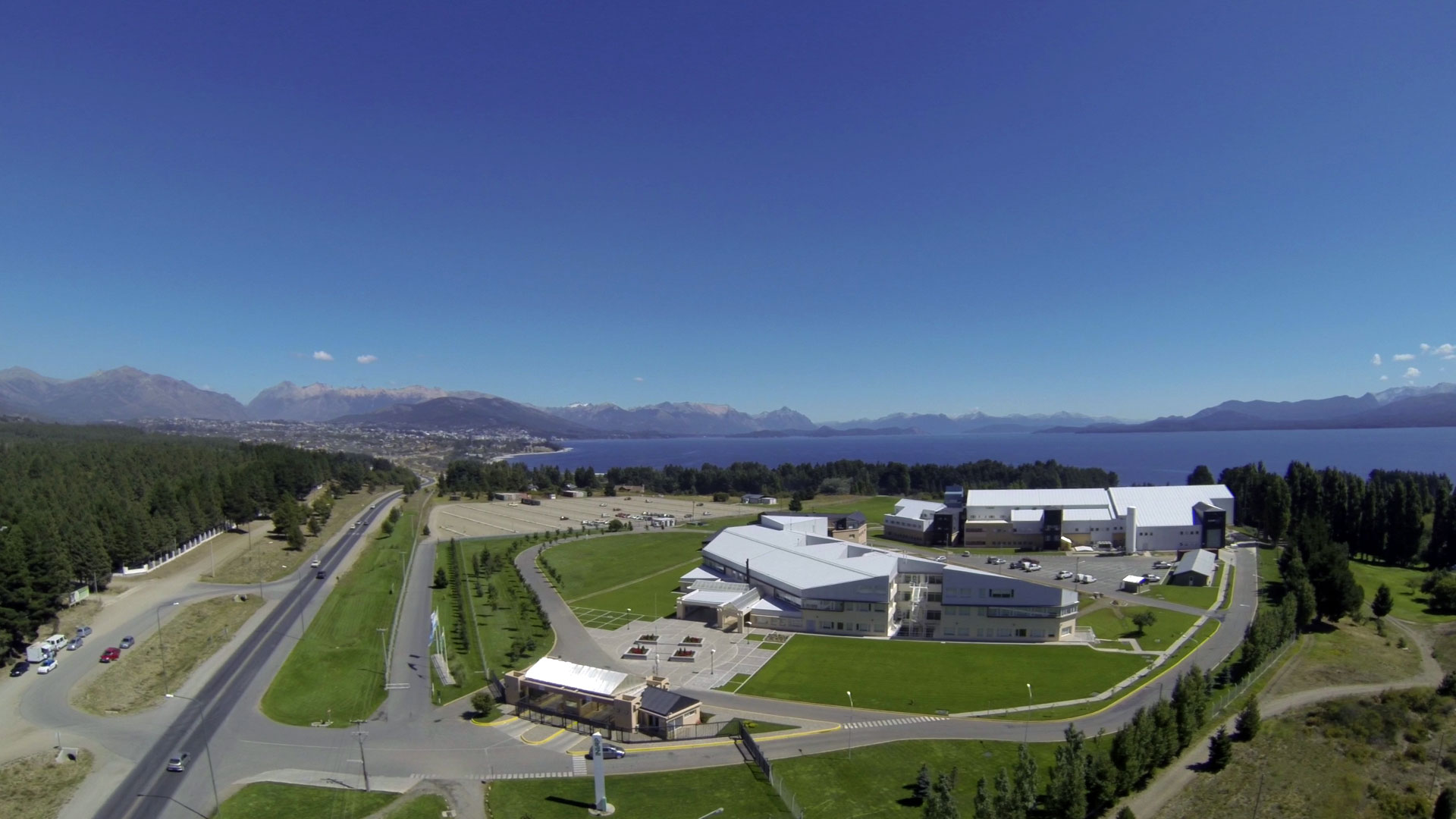
That place is Bariloche. The company making it happen is INVAP.
INVAP is a company owned by the Province of Río Negro that competes in international markets with highly demanding technological requirements. It works alongside Argentina’s scientific and technological system to turn knowledge into tangible projects. Each technology is developed and brought to maturity in Argentina before crossing borders—this is the model that enables our country to sit at the same table as the world’s leading technological powers.
IN
NUMBERS
development
technicians
completed
in America, Europe,
Asia, Africa, and Oceania
annual revenue
TECHNOLOGICAL
CAPABILITIES
 Space
Space Nuclear
 Defense, Security and Environment
 Medical Systems
PROJECTS IN PROGRESS
NRG-PALLAS
Petten, the Netherlands
The PALLAS reactor, currently under development for the Pallas Foundation, is designed to support radioisotope research and production for medical uses. It will replace the High Flux Reactor (HFR), in Petten, the Netherlands.
 View project map
RA10 MULTIPURPOSE REACTOR
This multipurpose reactor will have a strategic impact on the fields of health, science, technology, and industry. INVAP is the main contractor to the Argentine National Commission of Atomic Energy (CNEA, in Spanish) to carry out this project, located at the Ezeiza Atomic Center.
View project map 
ARSAT SG1
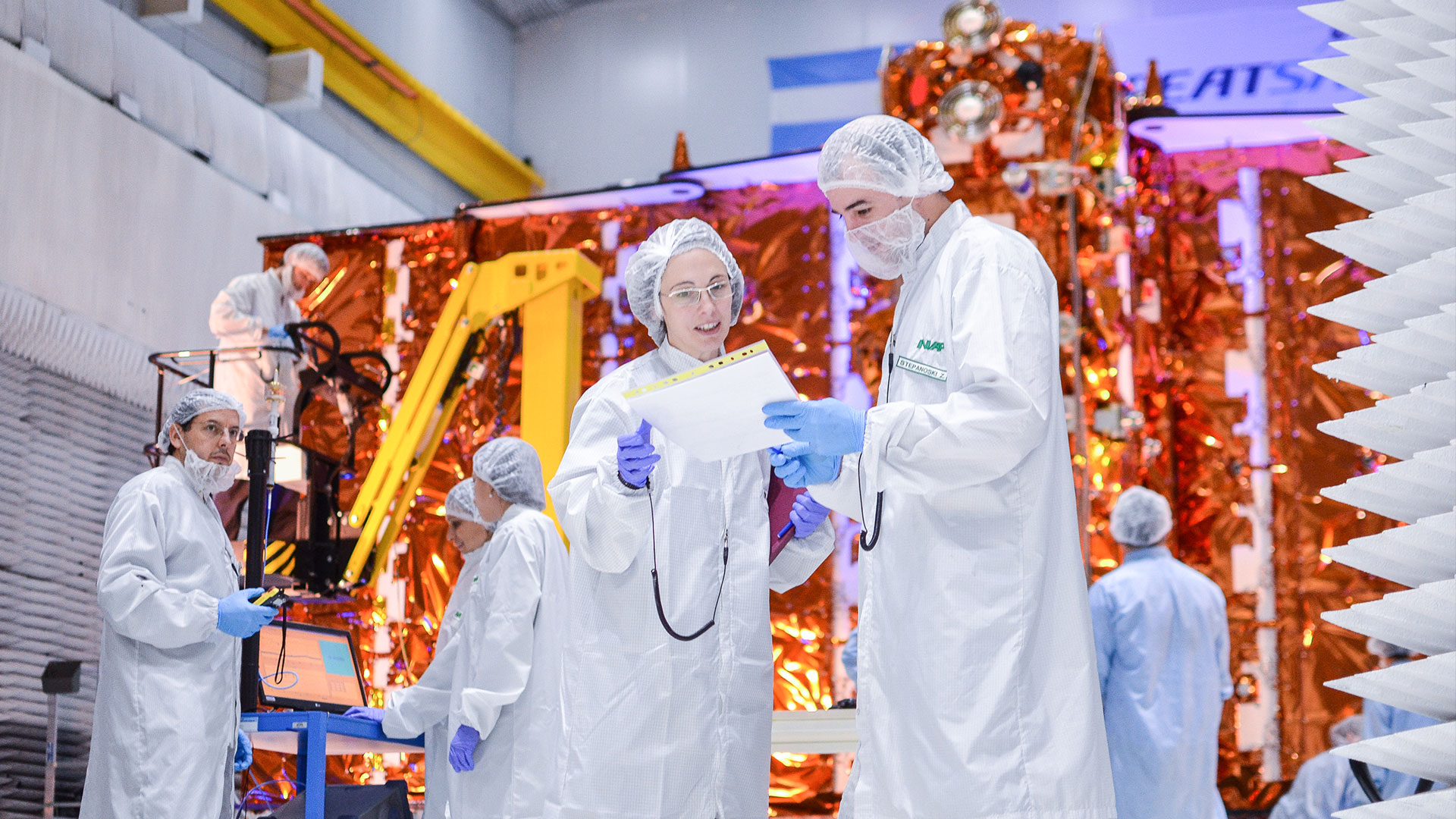
ARSAT-SG1 will be the third satellite in INVAP’s geostationary fleet, with the company serving as ARSAT’s main contractor. It will be electrically propelled, will provide Ka satellite broadband and will be equipped with the latest technology to deliver connectivity to any point in Argentina and to neighboring countries.
View project map 
SABIA-MAR
INVAP is the main contractor to the Argentine National Space Activities Commission (CONAE, in Spanish) to provide the flight segment for the SABIA-Mar mission (Satellite for Applications Based on Information from the Marine environment). This Earth observation satellite is aimed at studying the ocean and coastal areas, providing valuable data for the scientific and productive sectors.
View project map 
ARGENTINE METEOROLOGICAL RADAR | RMA
The RMAs generate real-time information on the location and intensity of rainfall and storms. Using this data, the National Meteorological Service (SMN, in Spanish) issues forecasts and warnings that help protect the people and plan productive activities. INVAP is the main contractor to the Undersecretariat of Water Resources for these radars, which are part of the SMN’s SINARAME project, the Argentine System of Meteorological Radars.
View project map 
RPA-200M
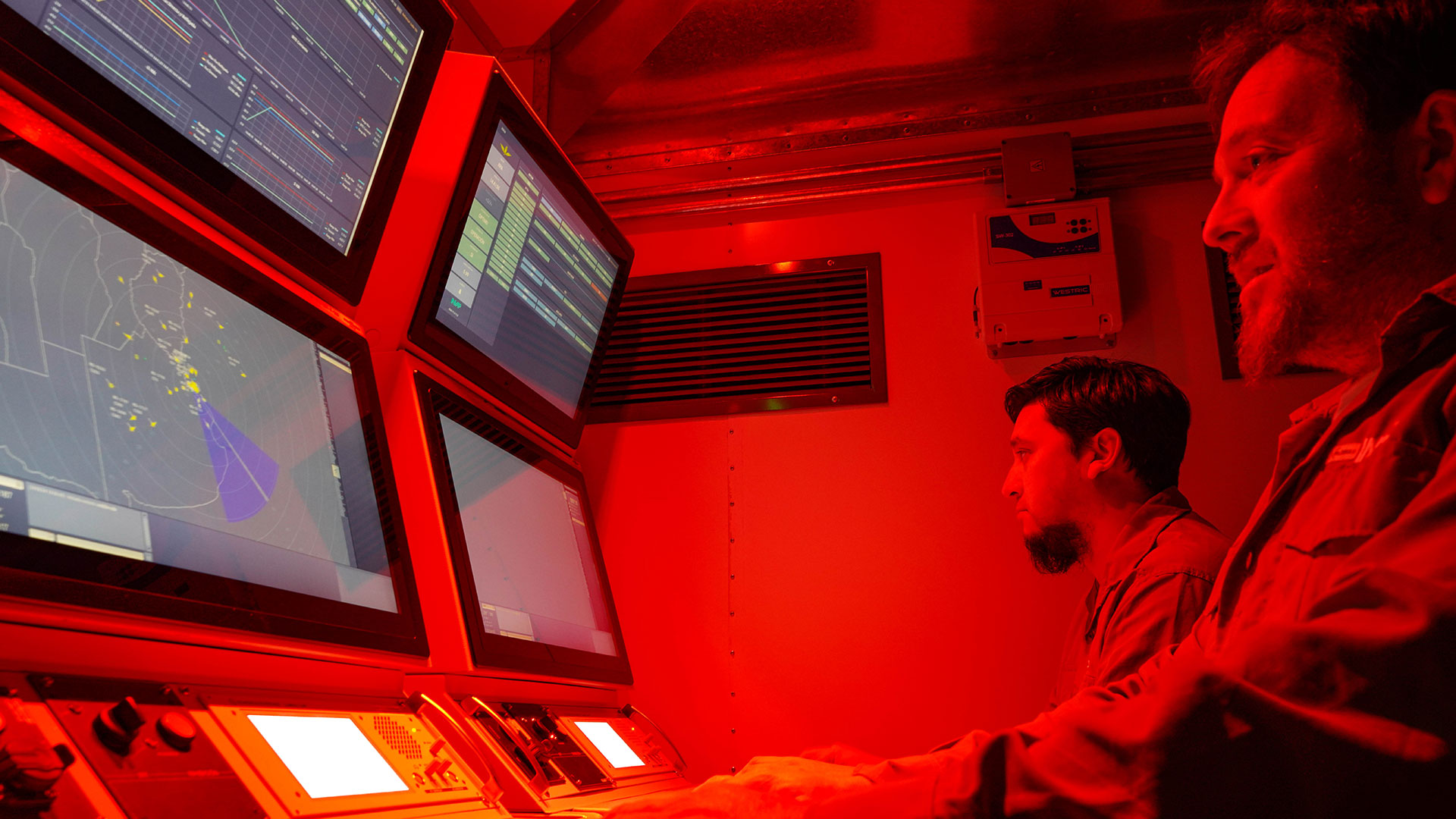
The RPA-200 is the most advanced radar system we have developed. Designed for air surveillance, border control, and the protection of sovereign airspace, these long-range 3D systems are capable of detecting and tracking aircraft over long distances and at high altitudes, providing comprehensive coverage of the airspace even in demanding environments. Its design combines advanced technologies in a robust, reliable solution, while its mobile configuration enables rapid deployment wherever it is needed. Project under development for the Argentine Army.
View project map 
ARGENTINE PROTON THERAPY CENTER
The Argentine Proton Therapy Center is the first of its kind in the Southern Hemisphere. It will be equipped with state-of-the-art technology for conventional radiotherapy and proton therapy treatments. INVAP is the main contractor to the Argentine National Commission of Atomic Energy (CNEA, in Spanish) for this turnkey project, which covers design, civil works, equipment supply, commissioning, and personnel training. The Center is currently in the final stages of construction. It comprises approximately 8,000 square meters distributed across four floors.
View project map 
ALEPH
A command-and-control system that integrates real-time information from satellites, drones, sensors, and IoT devices. ALEPH uses artificial intelligence to provide multidomain situational awareness and support decision-making in critical environments. Its flexible and interoperable architecture enables the conduct of operations, resource coordination, and scenario modeling at the strategic, operational, and tactical levels. Deployed at the Forest Fire Prevention and Response Service (SPLIF, in Spanish) of the Province of Río Negro for firefighting. There is also a prototype in Antarctica for monitoring operations in extreme environments.
View project map 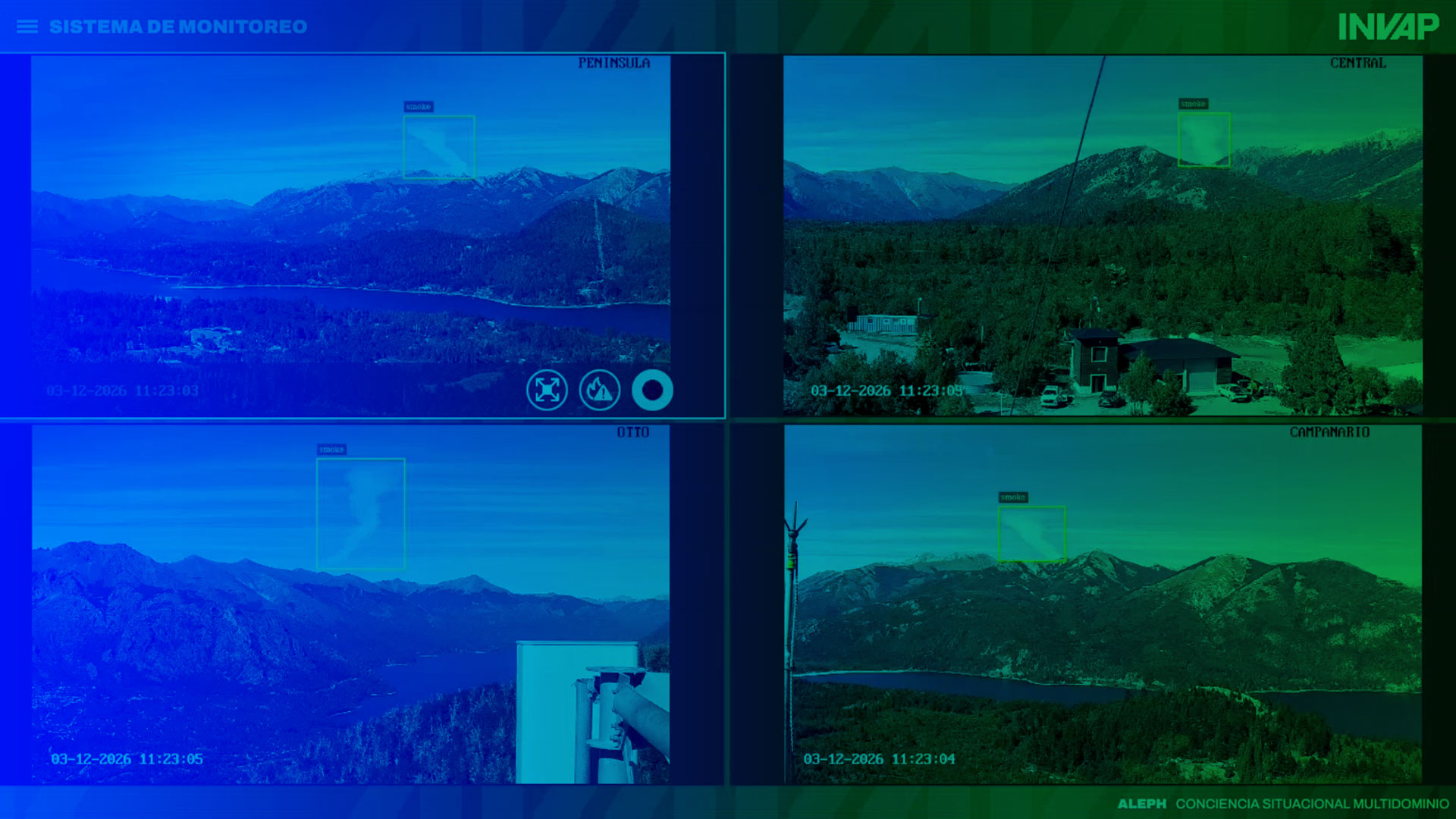
NRG-PALLAS
Petten, the Netherlands
The PALLAS reactor, currently under development for the Pallas Foundation, is designed to support radioisotope research and production for medical uses. It will replace the High Flux Reactor (HFR), in Petten, the Netherlands.
RA10 MULTIPURPOSE REACTOR
This multipurpose reactor will have a strategic impact on the fields of health, science, technology, and industry. INVAP is the main contractor to the Argentine National Commission of Atomic Energy (CNEA, in Spanish) to carry out this project, located at the Ezeiza Atomic Center.
ARSAT SG1
ARSAT-SG1 will be the third satellite in INVAP’s geostationary fleet, with the company serving as ARSAT’s main contractor. It will be electrically propelled, will provide Ka satellite broadband and will be equipped with the latest technology to deliver connectivity to any point in Argentina and to neighboring countries.
SABIA-MAR
INVAP is the main contractor to the Argentine National Space Activities Commission (CONAE, in Spanish) to provide the flight segment for the SABIA-Mar mission (Satellite for Applications Based on Information from the Marine environment). This Earth observation satellite is aimed at studying the ocean and coastal areas, providing valuable data for the scientific and productive sectors.
ARGENTINE METEOROLOGICAL RADAR | RMA
The RMAs generate real-time information on the location and intensity of rainfall and storms. Using this data, the National Meteorological Service (SMN, in Spanish) issues forecasts and warnings that help protect the people and plan productive activities. INVAP is the main contractor to the Undersecretariat of Water Resources for these radars, which are part of the SMN’s SINARAME project, the Argentine System of Meteorological Radars.
RPA-200M
The RPA-200 is the most advanced radar system we have developed. Designed for air surveillance, border control, and the protection of sovereign airspace, these long-range 3D systems are capable of detecting and tracking aircraft over long distances and at high altitudes, providing comprehensive coverage of the airspace even in demanding environments. Its design combines advanced technologies in a robust, reliable solution, while its mobile configuration enables rapid deployment wherever it is needed. Project under development for the Argentine Army.
ARGENTINE PROTON THERAPY CENTER
The Argentine Proton Therapy Center is the first of its kind in the Southern Hemisphere. It will be equipped with state-of-the-art technology for conventional radiotherapy and proton therapy treatments. INVAP is the main contractor to the Argentine National Commission of Atomic Energy (CNEA, in Spanish) for this turnkey project, which covers design, civil works, equipment supply, commissioning, and personnel training. The Center is currently in the final stages of construction. It comprises approximately 8,000 square meters distributed across four floors.
ALEPH
A command-and-control system that integrates real-time information from satellites, drones, sensors, and IoT devices. ALEPH uses artificial intelligence to provide multidomain situational awareness and support decision-making in critical environments. Its flexible and interoperable architecture enables the conduct of operations, resource coordination, and scenario modeling at the strategic, operational, and tactical levels. Deployed at the Forest Fire Prevention and Response Service (SPLIF, in Spanish) of the Province of Río Negro for firefighting. There is also a prototype in Antarctica for monitoring operations in extreme environments.
 View project map
 THE BEGINNING
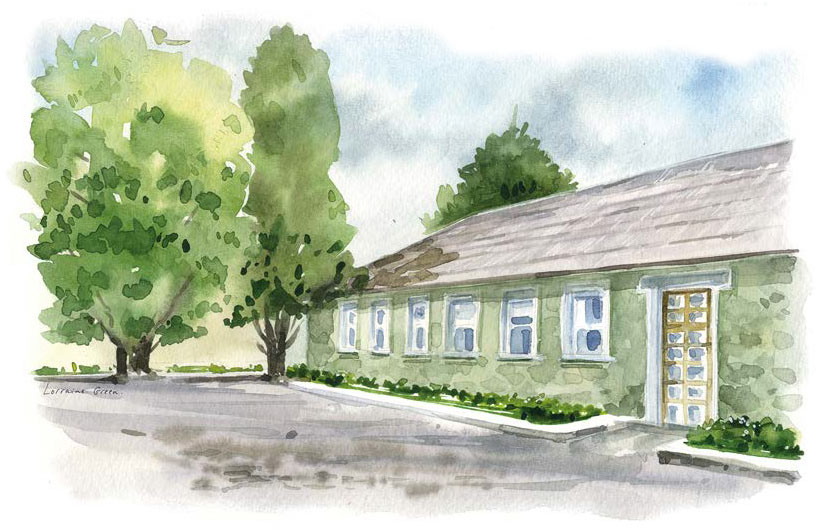
In the early 1970s, the Applied Research Program was created at the Bariloche Atomic Center, the seed from which INVAP would grow. Years later, the Province of Río Negro and the National Commission of Atomic Energy signed an agreement to establish a company that would undertake something unprecedented in Argentina: turning scientific knowledge into tangible, useful, and exportable technological projects. And so INVAP was born in Bariloche, with a handful of graduates from the Balseiro Institute and an idea that seemed too ambitious for its time and place.
What followed was half a century of sustained, long-term commitments. Research reactors exported to Algeria, Egypt, and Australia.
Satellites designed and built in Patagonia. Radars that today surveil Argentine airspace and monitor weather patterns. Nuclear medicine centers treating patients throughout Argentina and the region. Before expanding abroad, each project first operated within our country.
That is the logic behind INVAP: a company that builds technological sovereignty from within and projects it to the world.
OUR MILESTONES Scroll to explore the timeline 
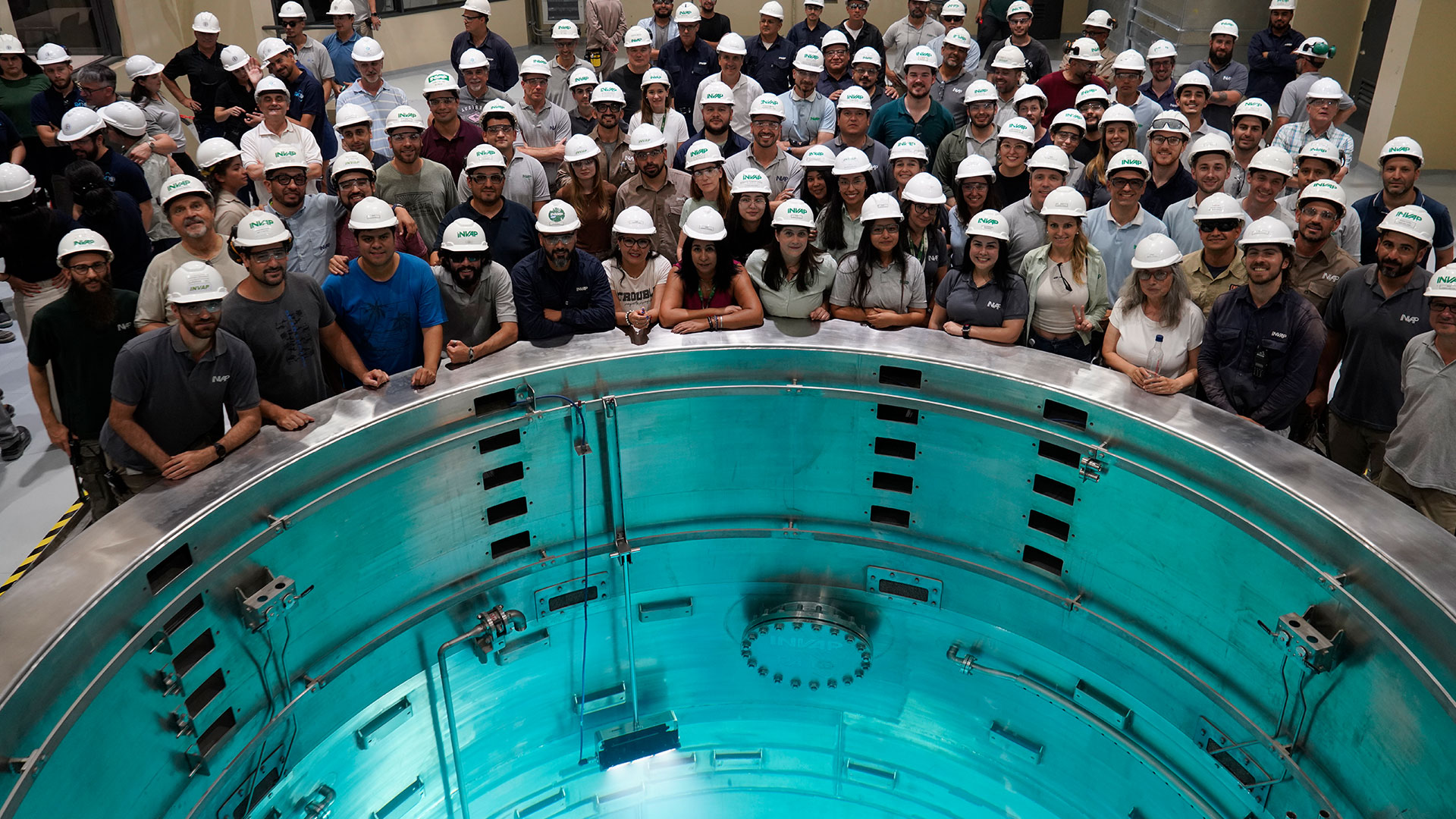
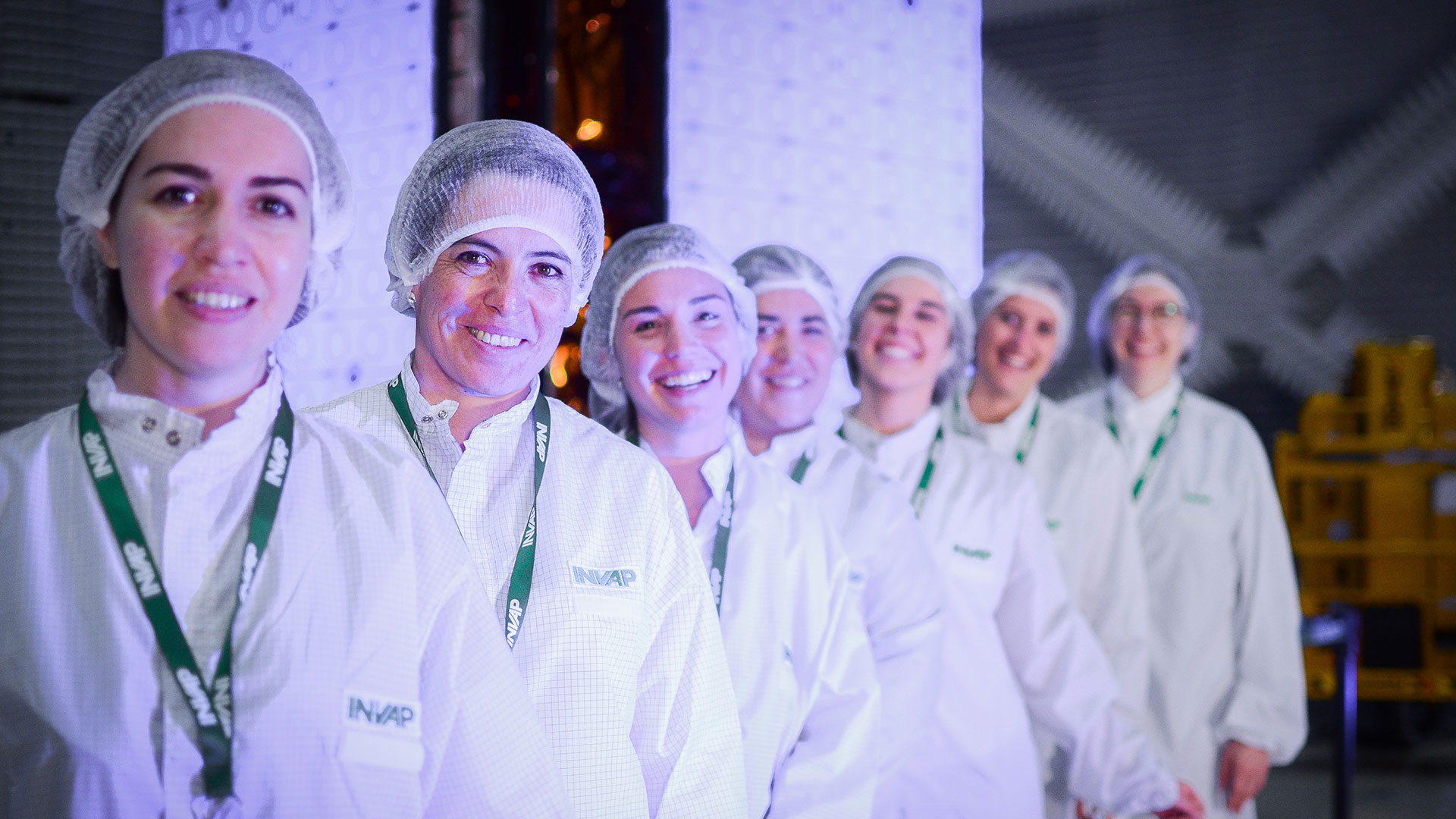
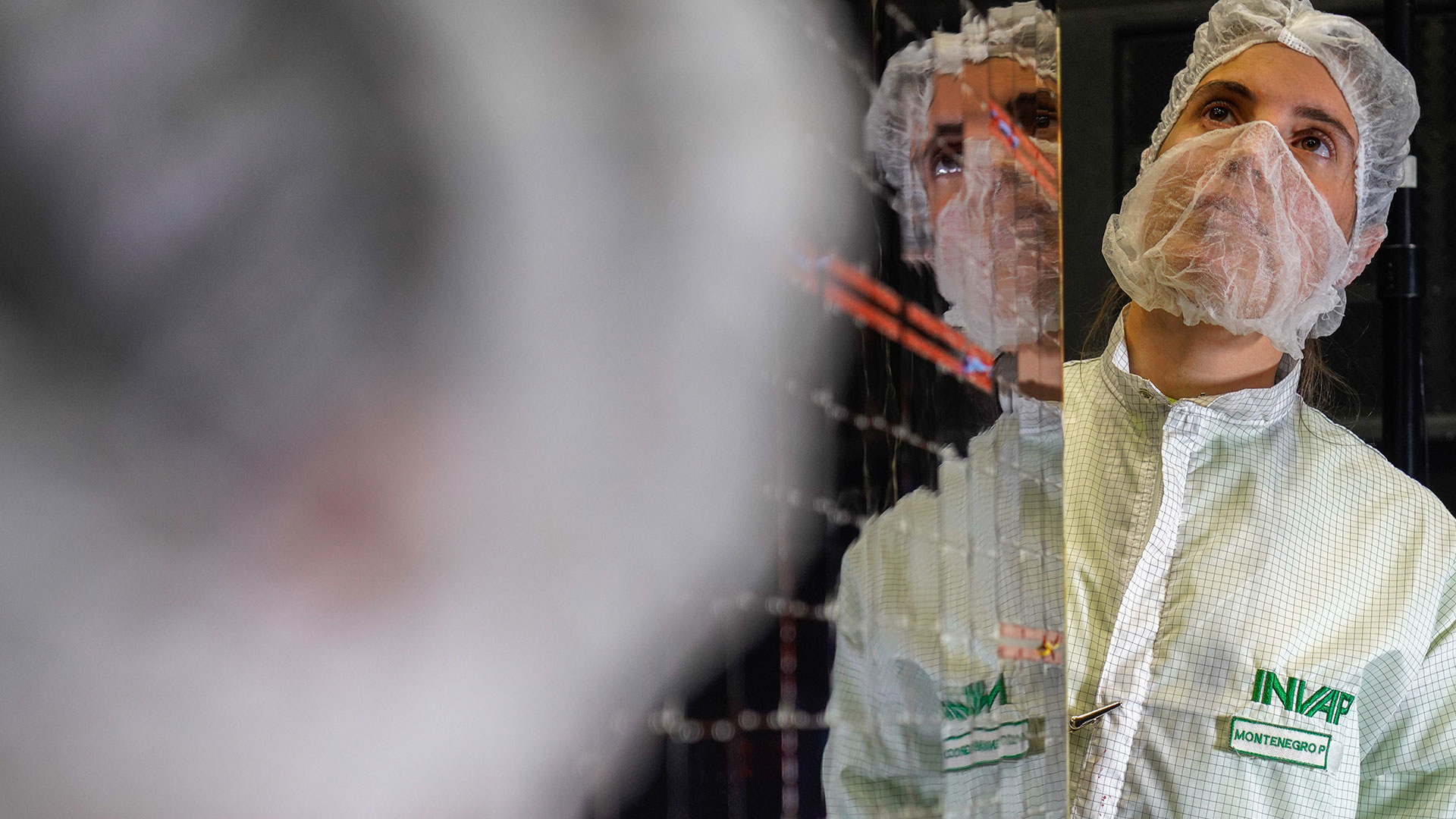
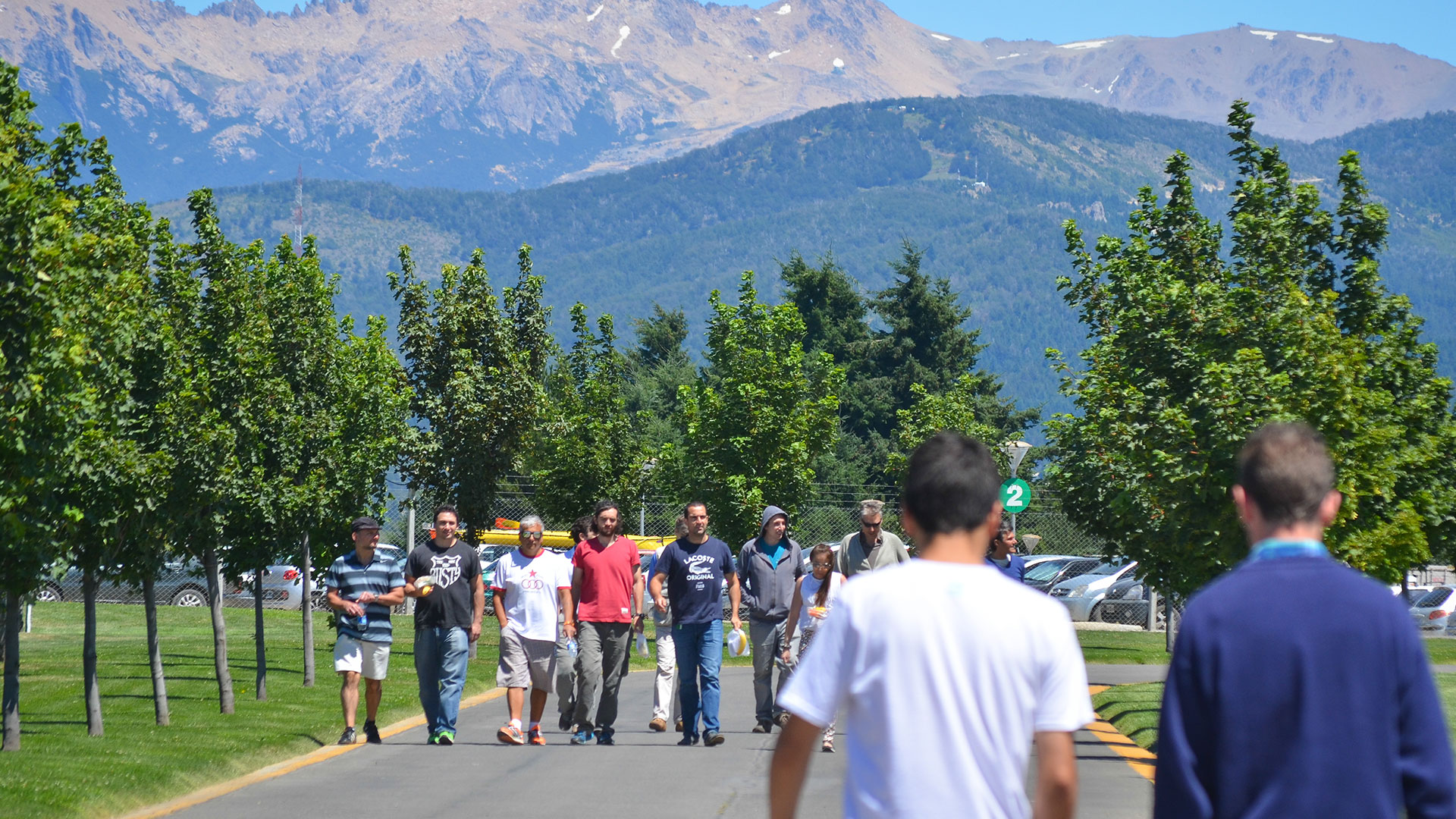
our people
our place


press kit
INVAP’s official media resources. Ready-to-use images, videos, and documents. Images
  Videos
  Documents
  Complete Media Kit
A thesis should not end up filed away. For this reason, since 2023, INVAP has organized this nationwide contest to recognize engineering theses that address real-world problems and have a tangible impact in the country’s strategic areas.
In its fourth edition—and as part of INVAP’s 50th anniversary—the call for applications is open to graduates from Argentine public and private universities, covering 15 engineering disciplines.
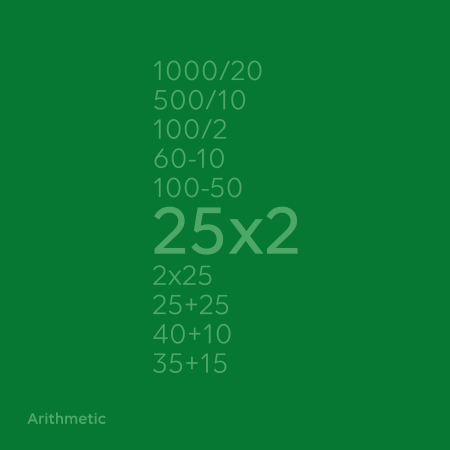
Language/code for each representation of the number fifty